

Sliding Door Mechanisms Explained: Top Hung, Bottom Rolling, Synchro & Soft Close
Every sliding door is really three parts working together: a track, the gear that carries the door, and guides that keep everything in line. Get the mechanism right and the door glides for decades; get it wrong and you live with grinding, derailing and slamming. This guide walks through each mechanism type — top hung, bottom rolling, synchro and soft close — so you can match the engineering to your opening before you spend a penny.
If you want to jump straight to systems, our complete sliding door kit range lists track lengths and weight ratings on every product page.

The Three Parts of Every Sliding System
The track sets the door's path, the gear (rollers or hangers) carries its weight, and the guides keep it vertical and aligned. Soft close, synchro and folding actions are all refinements built on this same foundation — which is why understanding the base mechanism makes every other decision easier.
Top Hung Mechanisms
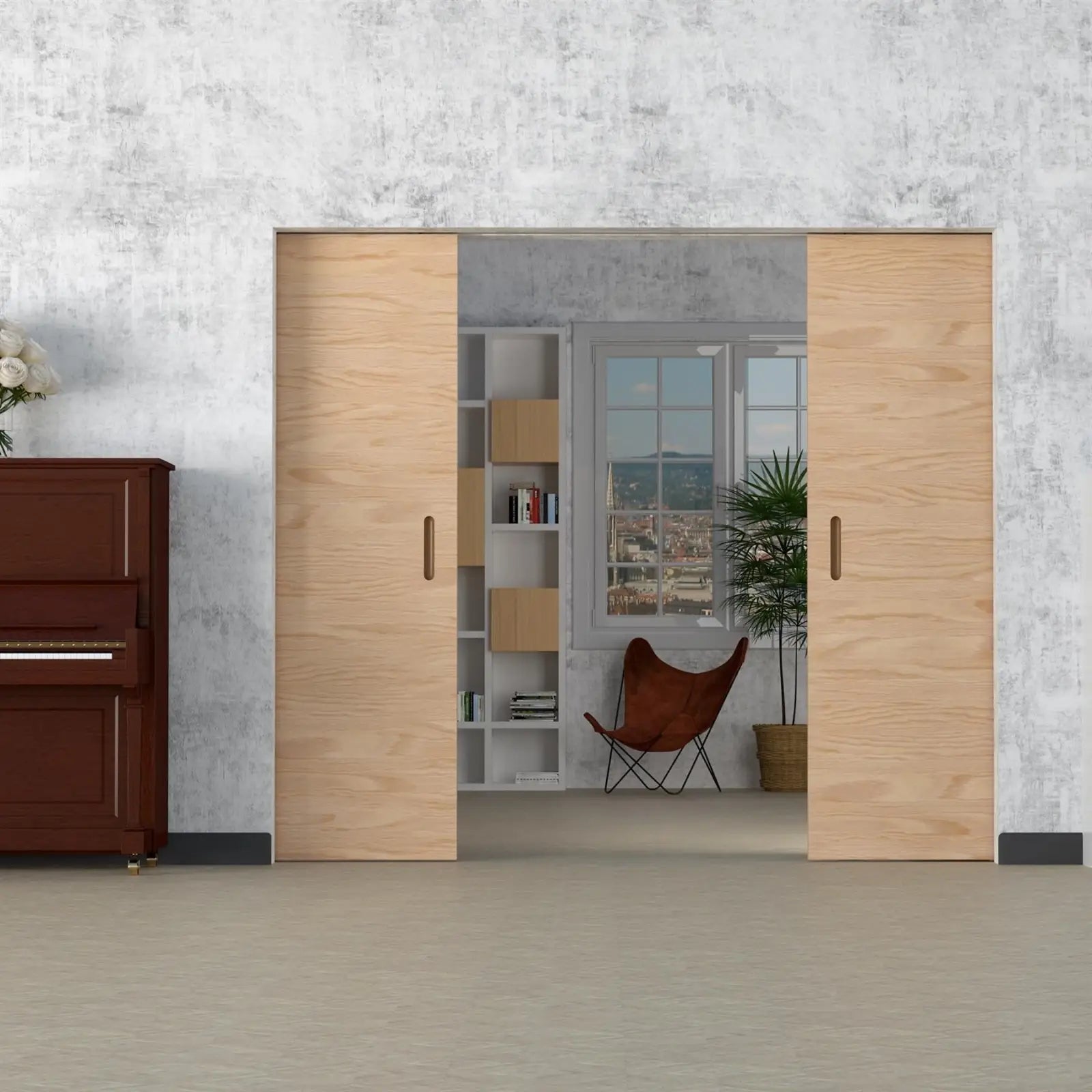
The door hangs from rollers running inside an overhead track, with a small floor guide keeping it vertical. Because the weight hangs from above, the action is smooth and quiet, and there is no floor track to collect grit or trip over — the threshold stays completely clear.
The catch: the header above your opening must carry the full weight of the door. In stud walls that usually means adding a timber or steel header. Our top hung sliding door kits carry up to 120kg per door, which covers almost any domestic door including heavy hardwood.
Bottom Rolling Mechanisms
Here the rollers sit under the door, running on a floor track, with a top guide for stability. The floor carries the weight, so there is no structural requirement above the opening — which is why most fitted-wardrobe systems, like our wardrobe sliding door kits, are bottom rolling. The trade-off is a visible floor track that needs an occasional vacuum to keep the running smooth.
Synchro Mechanisms
A synchro system links two doors with a cable or belt so that moving one moves the other in the opposite direction — push one door and the pair opens symmetrically from the middle. It is the premium action for wide cabinet doors and room dividers, and it halves the effort of opening a big run. See it in action across our synchro sliding door kits.
Soft Close: Worth It?
A soft close damper catches the door near the end of its travel and settles it shut — no slam, no rebound gap, less impact wear on the gear. On bedroom wardrobes it is genuinely worth the extra cost; our PS-Slide systems include it both ways as standard, and retrofit soft close mechanisms can be added to E-Slide systems one door at a time.
Folding and Telescopic Variations
Two specialist mechanisms solve specific problems. Bifold gear hinges doors in pairs and folds them back, opening nearly the whole aperture — the answer when a slider's permanent overlap is too costly (see bifold door kits). Telescopic gear stacks two or three doors to one side at different speeds, giving the widest clear opening a slider can achieve.
Quick Mechanism Comparison
- Top hung: Smoothest and quietest; needs a structural header; floor stays clear.
- Bottom rolling: No header needed; the wardrobe standard; floor track needs occasional cleaning.
- Synchro: Both doors move from one push; premium feel for wide openings.
- Soft close: Damped, silent closing; standard on PS-Slide, retrofittable on E-Slide.
- Bifold: Doors fold clear of the opening for near-full access.
- Telescopic: Multiple doors stack to one side for the widest openings.
Choosing in Practice
Three measurements decide it: opening width (sets track length — kits run 1200mm to 3000mm and trim to size), door count (keep each door under roughly a metre wide), and door weight (check the per-door rating; mirror and glass weigh far more than MDF).
Match the Mechanism to the Opening
Start from what your opening offers — overhead fixing, floor space and width — and the right mechanism picks itself. Browse the full sliding door kit range with weight ratings and track lengths listed on every kit, or read about complete systems in our sliding door systems collection.
Need a sliding door kit?
Shop our range of sliding door kits for every room. Choose from top hung kits, cabinet sliding door kits, wardrobe sliding door kits, and glass door kits. Free UK delivery and same day dispatch.
Read more
The Complete Guide to Kitchen Cabinet Handles and Knobs: Choosing, Installing, and Styling
Published: 26th September 2025 | Reading Time: 12 minutes | Category: Kitchen Hardware Kitchen cabinet hardware might seem like a small detail, but it's one of the most impactf...
Read more: The Complete Guide to Kitchen Cabinet Handles and Knobs: Choosing, Installing, and Styling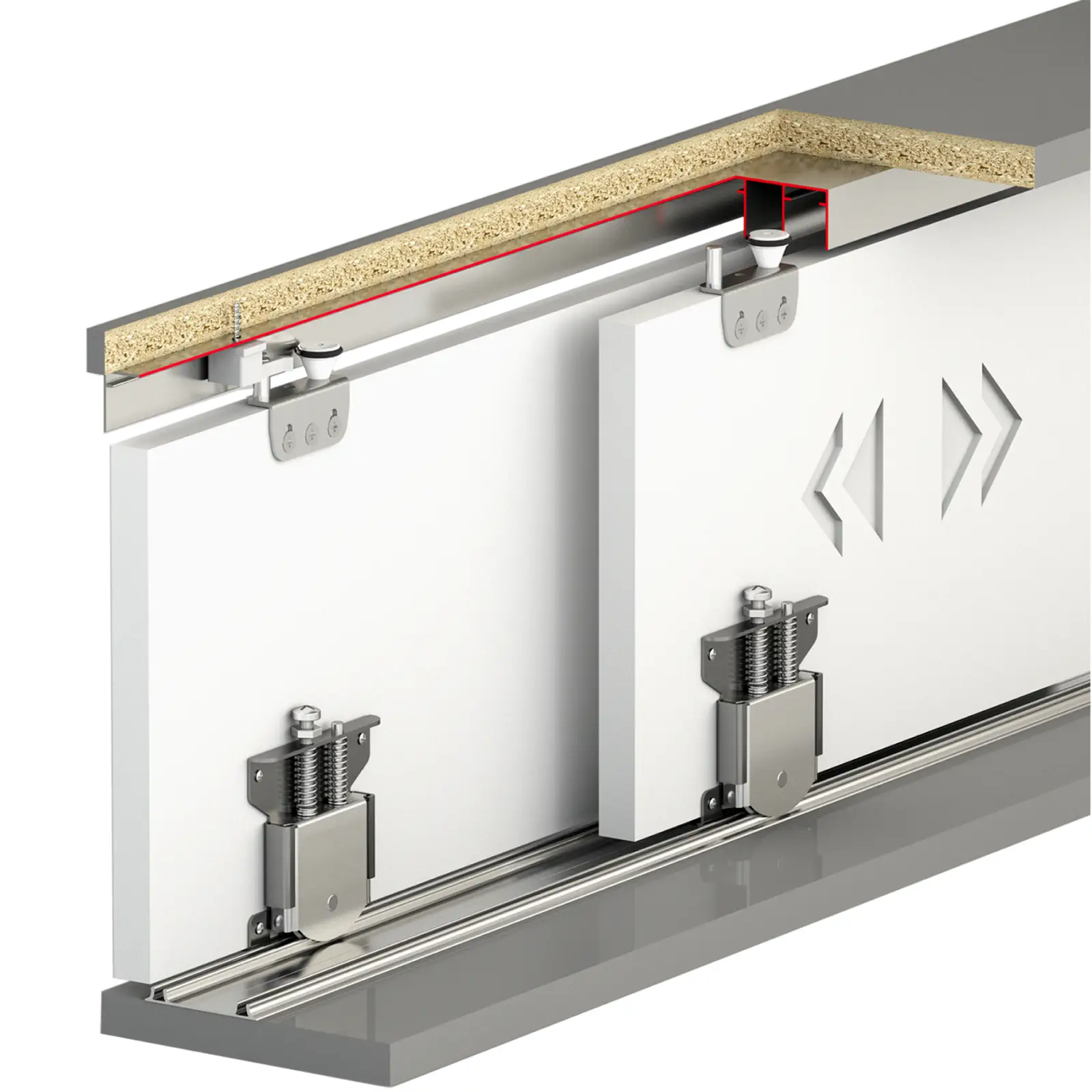
Sliding Wardrobe Doors: The Complete UK Buying Guide
Track sizes, door counts, panel weights and systems compared - everything to settle before buying sliding wardrobe doors.
Read more: Sliding Wardrobe Doors: The Complete UK Buying Guide