

Sliding Wardrobe Doors: The Complete UK Buying Guide
Sliding wardrobe doors are one of the best-value upgrades in a bedroom: no door swing eating floor space, a clean wall of storage, and — if you buy a kit rather than a made-to-measure system — a total cost that often comes in under a single fitted-wardrobe quote. Here is everything to settle before you order, from track sizes to panel weights.

Kit or Made-to-Measure?
A made-to-measure company sells you finished doors at finished-door prices. A kit, like our wardrobe sliding door kits, supplies the track, gear and fittings — you supply door panels cut to size in MDF, veneered board or mirror. For anyone comfortable with basic DIY, the kit route typically saves half or more.
Measure First: The Three Numbers
Opening width sets the track: kits come in 1200mm, 1500mm, 1800mm, 2400mm and 3000mm, and tracks trim down cleanly if your opening sits between sizes. Door count follows width — keep each door under about a metre for comfortable handling, so a 2400mm opening suits three doors better than two. Door weight matters most with mirror panels, which weigh far more than MDF; every kit lists a per-door rating, so weigh your panel choice against it before ordering.
Track Length Quick Guide
- 1200mm: 2 doors — alcoves and small openings
- 1500mm-1800mm: 2-3 doors — standard single wardrobes
- 2400mm: 3 doors — full bedroom wall runs
- 3000mm: 3-4 doors — wall-to-wall fitted wardrobes
The Systems Compared
E-Slide is the straightforward classic — bottom rolling gear, doors overlap and glide past each other. W-Slide adds a bifold action, folding doors as they slide for better access in tight rooms. PS-Slide is the premium choice with both-way soft close: doors settle closed gently from either direction, which is worth real money in a shared bedroom.
If full access matters more than anything, step over to a bifold door kit, which folds doors completely out of the opening — our comparison guide on bifold vs sliding wardrobe doors covers that decision in depth.
Handles and Finishing Touches
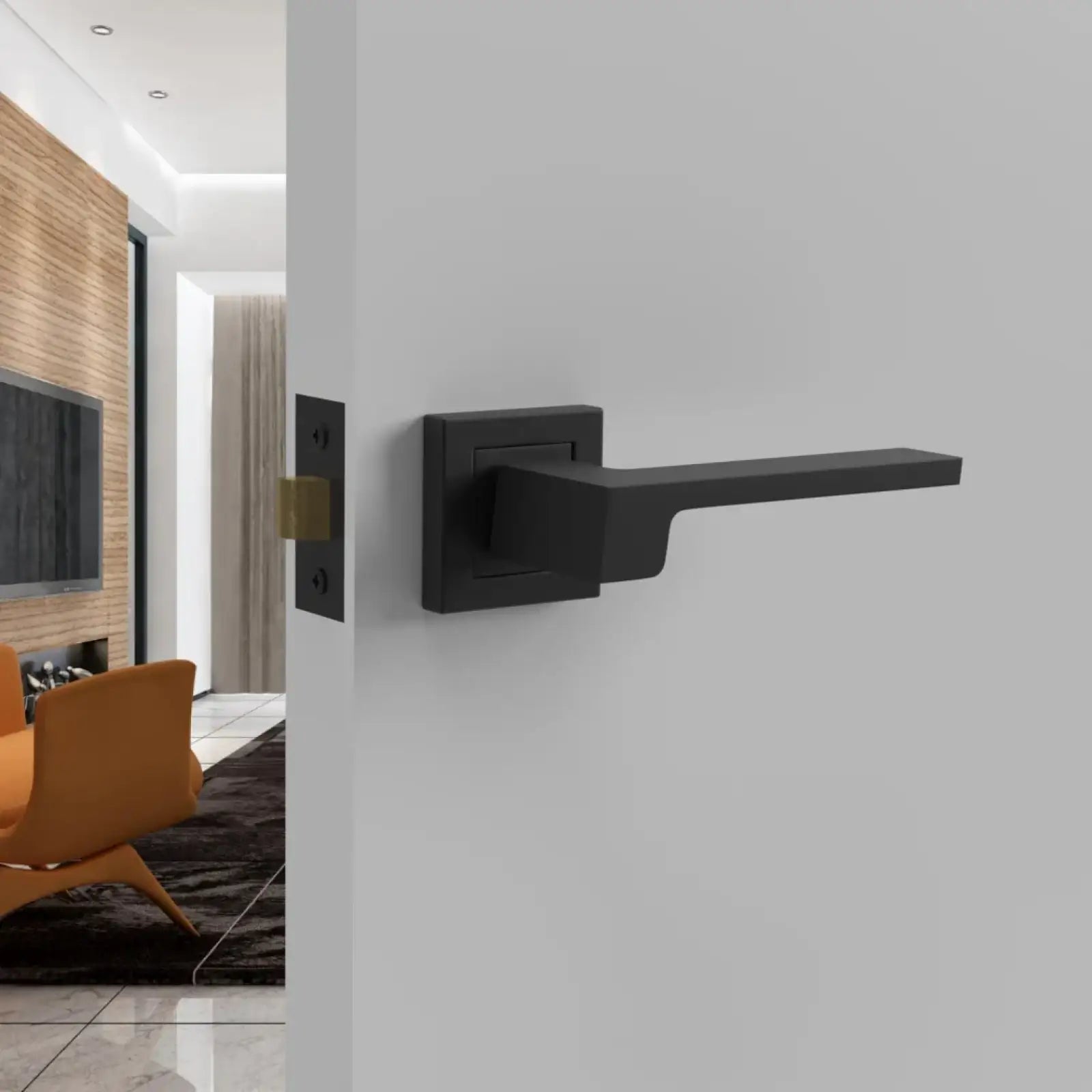
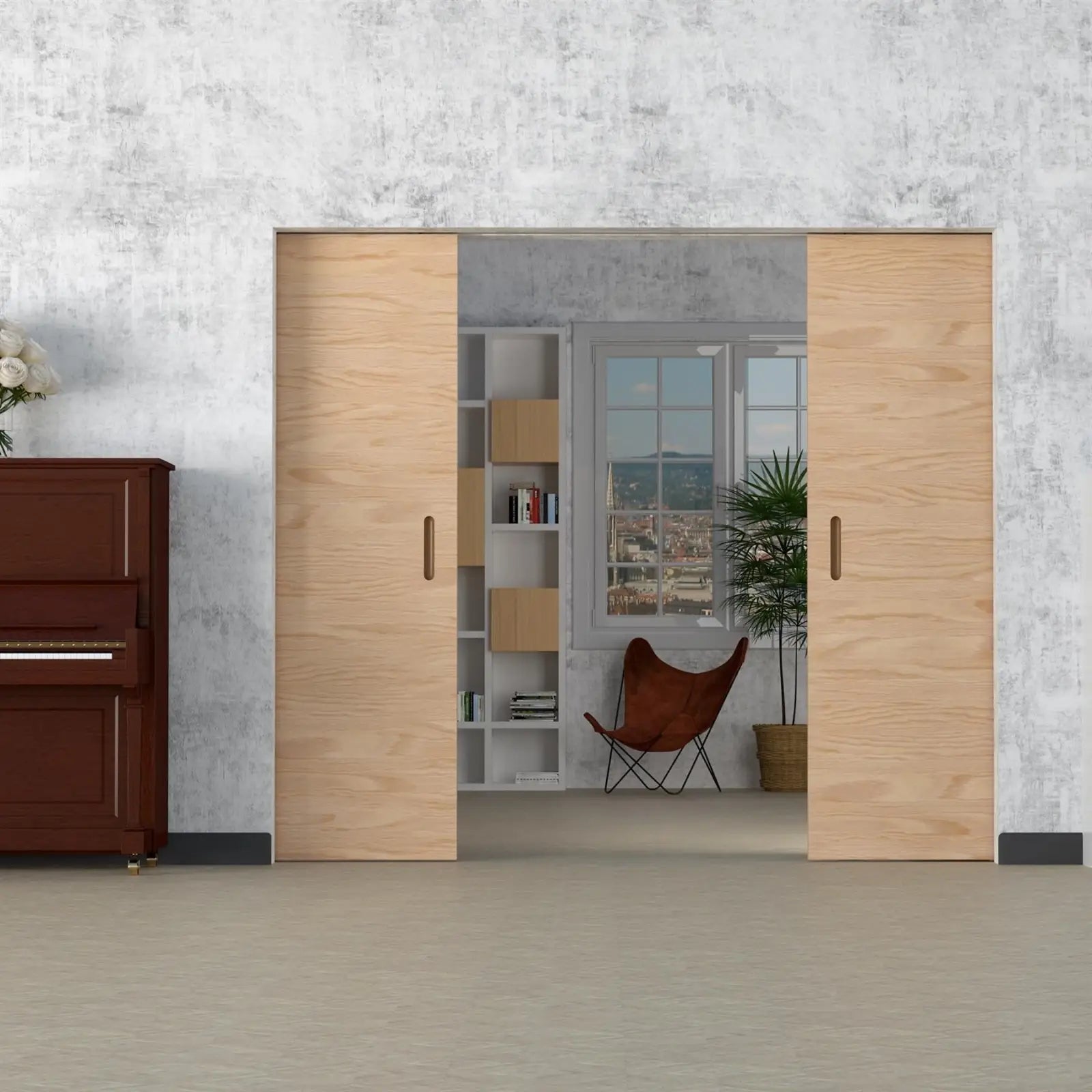
Sliding doors cannot take protruding handles — doors must pass each other — so they use flush aluminium profile handles running the door's height, available in 2.5m lengths to cut down. Brush strips seal the door edges and soften door-to-door contact. A pelmet track cover hides the top track for a built-in look. For hinged wardrobe doors, normal hardware applies — see wardrobe door handles.
Common Mistakes to Avoid
- Ordering track to door width rather than the full opening width.
- Forgetting the overlap — part of the wardrobe is always behind a door.
- Choosing mirror panels without checking the kit's per-door weight rating.
- Economising on gear — the rollers do all the work, every day, for years.
- Skipping soft close in shared bedrooms — the night-time slam is real.
Ready to Spec Your Wardrobe?
Measure the opening, decide hinged vs sliding vs bifold, then match a system to your door count and panel weight. The full range, with track lengths and weight ratings on every product page, is in our sliding door kits collection — and the wardrobe-specific systems are one click further.
Need a sliding door kit?
Shop our range of sliding door kits for every room. Choose from top hung kits, cabinet sliding door kits, wardrobe sliding door kits, and glass door kits. Free UK delivery and same day dispatch.
Read more
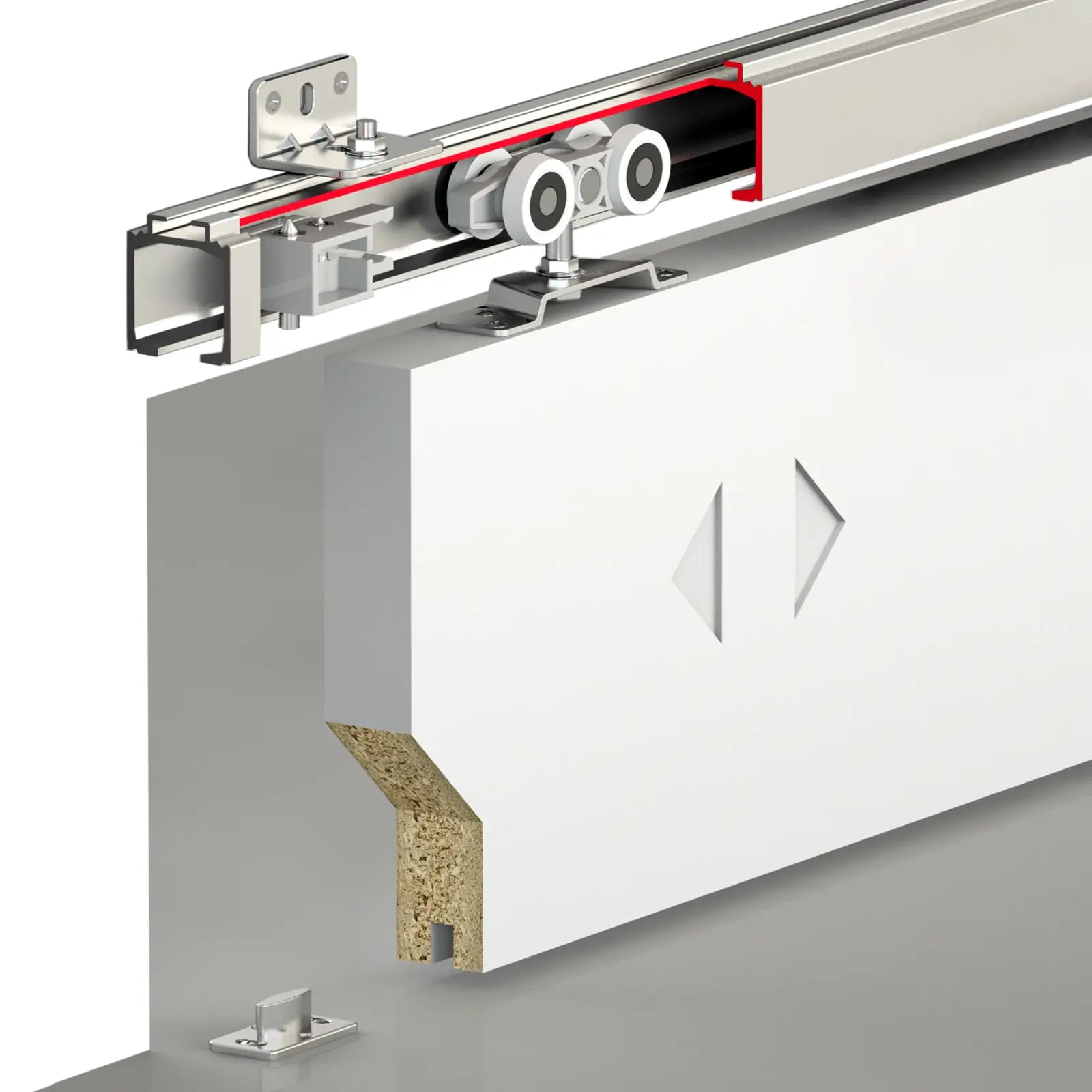
Sliding Door Mechanisms Explained: Top Hung, Bottom Rolling, Synchro & Soft Close
Top hung, bottom rolling, synchro or soft close? How each sliding door mechanism works and which one suits your opening.
Read more: Sliding Door Mechanisms Explained: Top Hung, Bottom Rolling, Synchro & Soft Close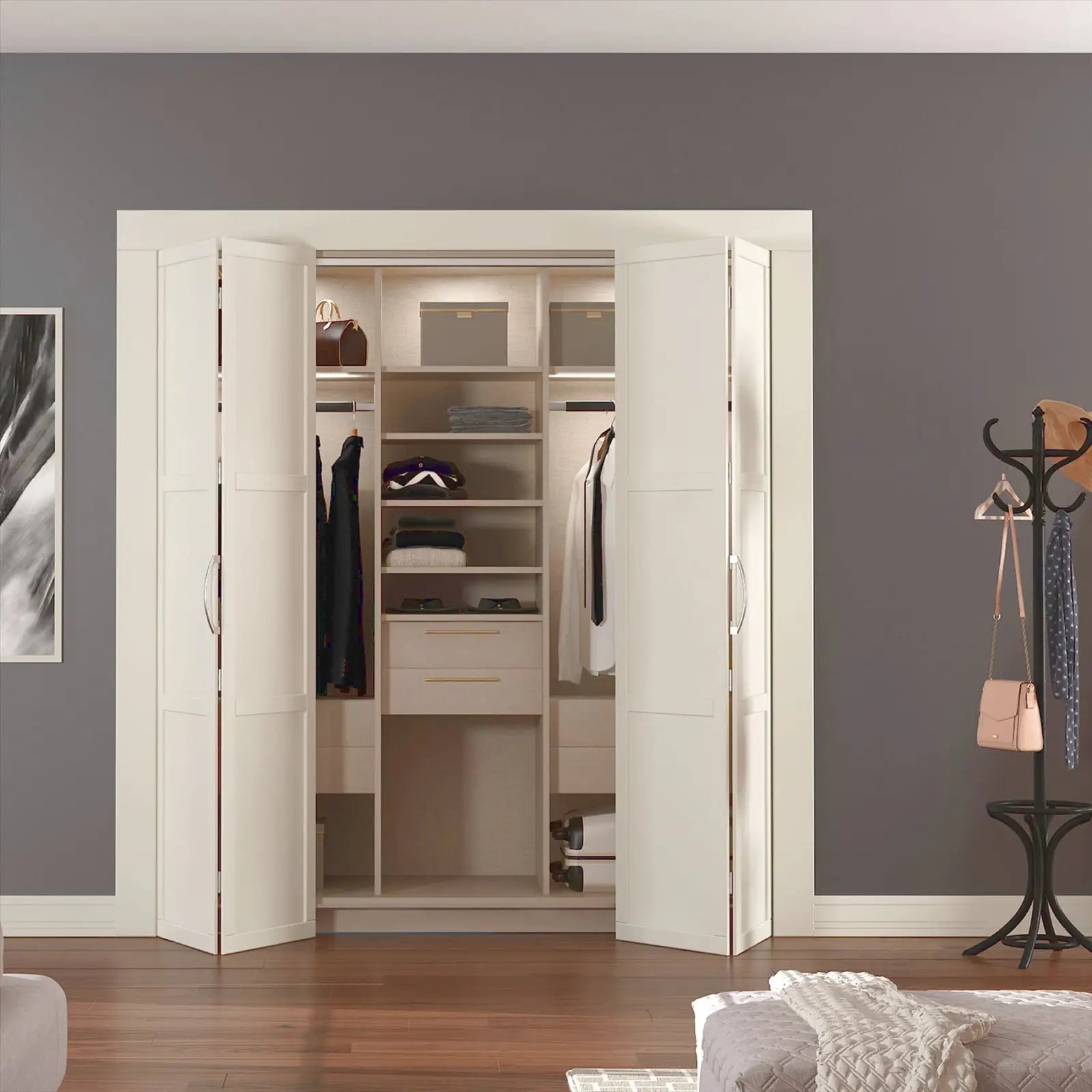
Bifold vs Sliding Wardrobe Doors: Which Should You Choose?
Bifold doors open the whole wardrobe; sliding doors never block the room. The honest trade-offs to pick the right system.
Read more: Bifold vs Sliding Wardrobe Doors: Which Should You Choose?