

A Brief Guide To Kitchen Layouts
Your kitchen layout is one of the most important factors in ensuring you have a practical and functional area. A clever layout makes most of the available space and helps you keep everything well organised. There’s a lot more to layout than storage; flow is also an important consideration, especially if you have an open plan space with islands and doorways to work around. The floor plan of your house plays an important role in your kitchen layout—along with ergonomics. Getting the heights right and ensuring there’s enough space for comfortable movement all factor in when picking the right kitchen layout for your space.
Understanding the Core Kitchen Layouts
The foundation of any successful kitchen renovation starts with the floor plan. Whether you are working with a compact apartment in London or a sprawling country home, the arrangement of your cabinetry and appliances dictates your daily efficiency.
U-Shaped Kitchen
A U-shaped modular design features a layout where counters run along three sides of the kitchen in the shape of “U.” This layout is a versatile and efficient option that provides a lot of space for appliances and storage, ensuring key appliances are within easy reach. The concept of a “Work Triangle” fits naturally with a U-shaped kitchen layout as your food preparation (stovetop), food storage area (fridge), and cleaning area (sink) are placed within arm’s reach.
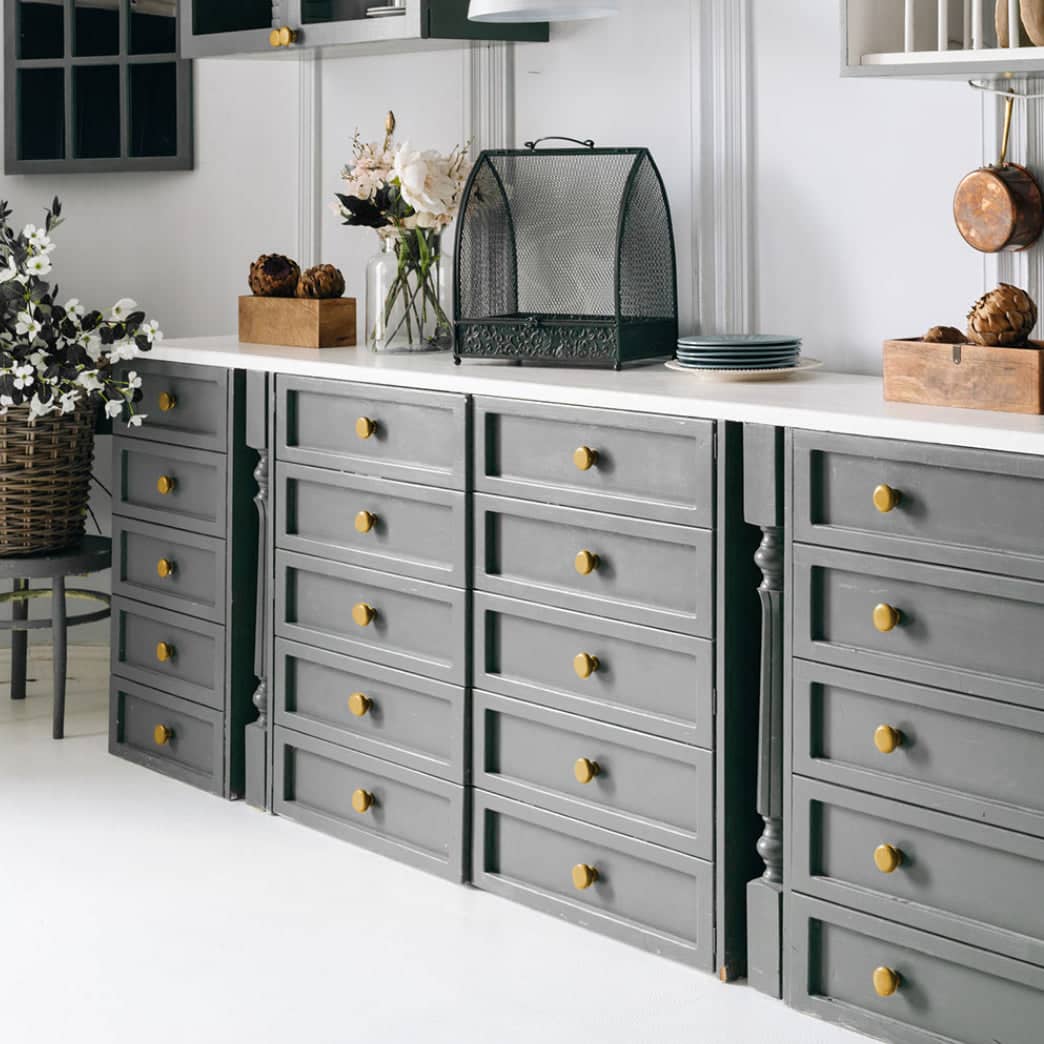
You can make a U-shaped kitchen layout feel more open and uncluttered by choosing upper cabinets along two walls, and focal tiles or open shelving along the third one. For these expansive runs of cabinetry, many homeowners opt for cabinet handles that offer a comfortable grip for frequent use. In a U-shaped kitchen, the distance between the two opposing arms should ideally be at least 1,200mm to allow for multiple people to work without obstruction.
Galley Kitchen
Galley or parallel kitchens feature two rows of cabinetry facing each other, creating a galley or inner passage between them. This is ideal for floor plans where the kitchen space is long and narrow. You will often notice this layout in flats where counters, sinks, kitchen drawer handles, and cabinet knobs are placed within easy reach to improve efficiency.
We love galley kitchen layouts because they make economical use of cabinets and use every millimetre of the space. Light flows steadily through windows within this kitchen layout, making it a delightful space for any home chef! In a galley setup, it is vital to ensure that the corridor is at least 1,000mm wide for a single cook, or 1,200mm if the kitchen serves as a thoroughfare to other rooms.
The Island Kitchen
A norm in households with an open plan, island kitchen layouts have been all the hype these recent years! The island incorporates a cooking surface with a sink and is used for both preparing and enjoying meals. This layout provides a large surface area for work in the middle of the kitchen, with enough space for families and kids to interact while meals are being prepared. It creates an incredible flow of traffic in the area.
Since the island is located in the centre of the area, you can install decorative lighting and storage to make the area more functional and brightly ventilated. To maintain a cohesive look, many designers pair the island drawers with cup handles for a traditional touch, while using sleek D handles on the perimeter tall units.
Expanding the Layout Options: L-Shaped and One-Wall Kitchens
The L-Shaped Kitchen
The L-shaped layout is perhaps the most popular choice for modern UK homes. It consists of two adjacent walls of cabinetry that meet in a corner, forming an 'L'. This layout is highly effective for small to medium-sized kitchens because it eliminates the "dead-end" feel of a U-shaped kitchen and opens up the floor space for a dining table or a small breakfast bar.
From a technical perspective, the L-shaped layout excels at separating the cooking zone from the cleaning zone. By placing the sink on one axis and the hob on the other, you create a natural workflow. To maximise the corner storage—often a pain point in L-shaped designs—homeowners frequently install "LeMans" pull-outs or "Magic Corners." These heavy-duty storage solutions require sturdy bow handles to ensure the weight of the internal shelving can be pulled out smoothly and safely.
The One-Wall Kitchen
Commonly found in studio apartments or open-plan loft conversions, the one-wall kitchen places all cabinetry and appliances along a single vertical surface. While it is the most space-efficient layout, it requires meticulous planning to ensure functionality. In this setup, the "Work Triangle" becomes a "Work Line."
To make a one-wall kitchen work, the sink is typically placed between the fridge and the cooker. Vertical storage is essential here; taking cabinets all the way to the ceiling provides extra space for seasonal items. Using uniform cabinet handles across all units can help create a streamlined, unobtrusive look that blends the kitchen into the living area.
The Importance of Ergonomics and Technical Measurements
A beautiful kitchen is useless if it is uncomfortable to use. Ergonomics—the study of people's efficiency in their working environment—is the backbone of kitchen design. In the UK, standard kitchen dimensions are generally followed to ensure compatibility with appliances and hardware.
- Worktop Height: The standard height for a kitchen worktop is 900mm to 910mm. This is designed to be comfortable for the average adult to prep food without straining their back.
- Counter Depth: Standard base units are 600mm deep. This allows for a 20mm to 30mm overhang of the worktop, protecting the cabinet knobs and handles from spills.
- Wall Cabinet Height: Wall units are typically installed 450mm to 600mm above the worktop. If they are placed too low, they obstruct the workspace; too high, and they become inaccessible.
- The Golden Triangle: The total distance between the sink, fridge, and hob should be between 3.6 metres and 7.9 metres. If the distance is too short, the kitchen feels cramped; if it is too long, meal preparation becomes exhausting.
The Role of Hardware in Kitchen Functionality
While the layout defines the "where," the hardware defines the "how." The way you interact with your kitchen is determined by the touchpoints—the handles, knobs, and hinges. When selecting hardware for your specific layout, consider the following:
For high-traffic areas like the bin cupboard or the dishwasher, D handles are often preferred because they allow for a full-hand grip, making it easier to pull against the vacuum seal of a modern appliance. In contrast, cup handles are excellent for heavy drawers filled with pots and pans, as they allow the user to lift and pull simultaneously, distributing the weight across the fingers.
In smaller galley kitchens, low-profile bow handles or recessed pulls are recommended to prevent clothing from snagging as you move through the narrow passage. Every millimetre counts in a tight space, and choosing hardware that doesn't protrude excessively can significantly improve the "flow" of the room.
Buying Guide: Choosing the Right Components for Your Layout
When planning your kitchen layout and purchasing the necessary hardware, follow these practical steps to ensure a professional finish:
1. Assess Your Storage Needs
Before buying cabinets, inventory your kitchen items. Do you have more heavy pots (requiring deep drawers and sturdy cup handles) or small pantry items (requiring tall larders and cabinet handles)?
2. Match Hardware to Cabinet Style
- Shaker Style: Pairs perfectly with cup handles on drawers and cabinet knobs on doors.
- Modern/Minimalist: Suits long, sleek D handles or handleless "push-to-open" mechanisms.
- Traditional/Rustic: Often features bow handles in antique brass or black finishes.
3. Consider the Finish
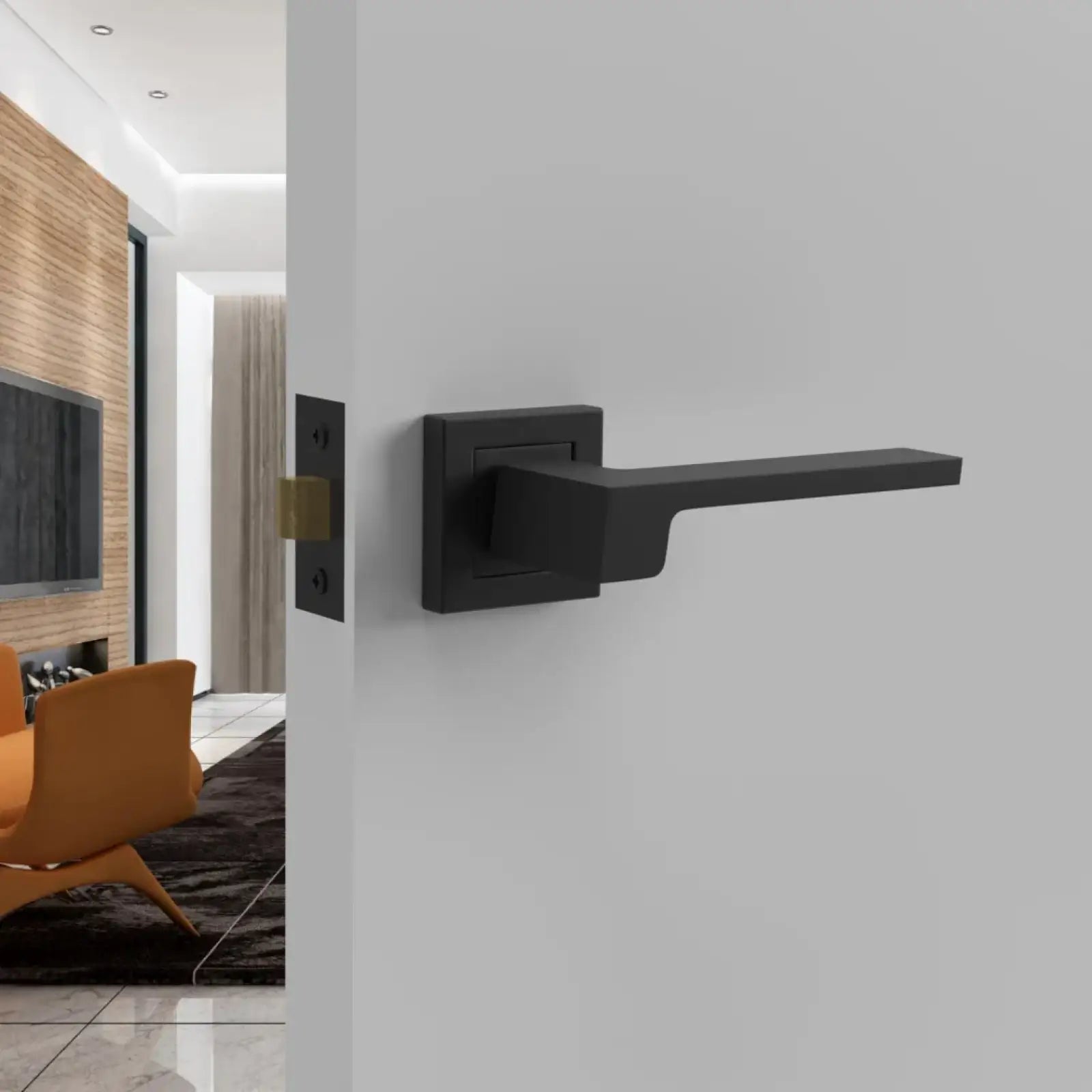
The finish of your hardware should complement your appliances and tap. Popular UK finishes include Brushed Nickel, Polished Chrome, and Matt Black. Ensure that all your cabinet handles come from the same manufacturer to guarantee a perfect colour match across the room.
4. Check the "Centre-to-Centre" Measurement
If you are replacing existing handles, measure the distance between the two screw holes. This is known as the "centre-to-centre" measurement. Standard UK sizes include 96mm, 128mm, and 160mm. Buying the correct size ensures you don't have to drill new holes in your cabinet doors.
Common Mistakes to Avoid
Even with a great layout, small errors can lead to daily frustrations. Avoid these common pitfalls:
- Blocking the Flow: Ensure that when the oven door or dishwasher is fully open, there is still enough room for someone to walk past. This is a frequent issue in narrow galley kitchens.
- Inadequate Lighting: Don't rely solely on a central ceiling light. Install task lighting under wall cabinets to illuminate the worktops where you will be using knives and appliances.
- Poor Handle Placement: Placing a knob or handle too high on a wall unit or too low on a base unit can cause ergonomic strain. Always test the placement with a piece of Blu-Tack before drilling.
- Neglecting the "Landing Space": Every major appliance needs a "landing space"—a clear section of worktop—next to it. For example, you need space next to the oven to set down hot trays, and space next to the fridge to unload groceries.
- Ignoring the Corner: In U-shaped and L-shaped kitchens, corners can become "dead zones." Always plan for corner carousels or specialised hardware to make these areas accessible.
Frequently Asked Questions (FAQ)
What is the best layout for a small kitchen?
The Galley kitchen is widely considered the most efficient layout for small spaces. It maximises every inch of wall space and keeps the work triangle tight, reducing the number of steps taken during meal prep.
How much space should be between a kitchen island and the counter?
For a comfortable and safe kitchen, you should maintain a minimum of 1,000mm (1 metre) of walkway space around the island. If the island contains a hob or sink, 1,200mm is preferred to allow for safe movement around heat and water.
Can I change my kitchen layout without moving the plumbing?
While you can change the configuration of your cabinets, moving the sink or dishwasher usually requires a plumber to reroute the waste and supply pipes. If you are on a budget, it is best to keep the "wet" appliances in their original locations and reorganise the "dry" storage around them.
Should I use knobs or handles on my kitchen cabinets?
This is often a matter of personal preference, but a common rule of thumb is to use cabinet knobs on doors and cabinet handles or cup handles on drawers. Handles provide more leverage for pulling open heavy drawers, while knobs offer a clean look for lighter cabinet doors.
Conclusion
Designing your dream kitchen is a balance between aesthetic appeal and technical precision. Whether you opt for the social atmosphere of an Island layout or the streamlined efficiency of a Galley kitchen, the success of your project lies in the details. From the initial floor plan to the final installation of your cabinet handles and knobs, every choice contributes to the flow and functionality of your home.
When designing the layout of your dream kitchen, invest in high-end furniture fittings, including beautiful kitchen door stops, external door handles, doorknobs, and door hinges. Our online store features a vast range of fittings that will go perfectly with your contemporary or vintage style kitchen. Explore our full range of D handles, bow handles, and cup handles to find the perfect finishing touch for your renovation.
Ready to transform your kitchen? Check out our collection today and find the hardware that brings your layout to life!
Related Products
Free UK delivery and same day dispatch on all orders.
Read more
Upgrade Your Kitchen Cabinets: 3 Tips
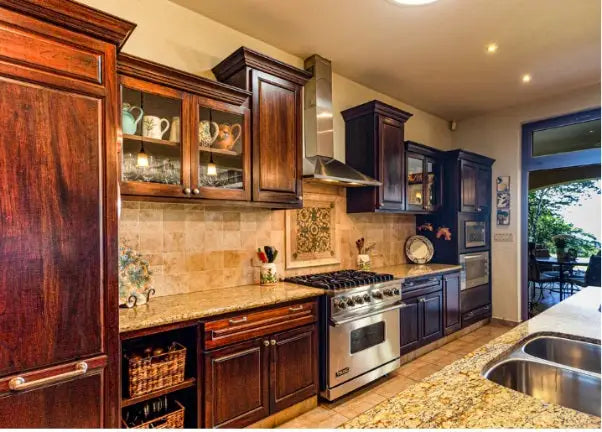
Kitchen cabinets set the tone for your kitchen area, and if you have an open floor plan, they impact the overall design of your home. If you’re planning a kitchen remodel, revamping your cabinets c...
Read more: Upgrade Your Kitchen Cabinets: 3 Tips
Clutter Control: How to Organize and Revamp Your Drawers and Cupboards
The kitchen is one of the hardest areas in the home to keep neat and organised. Have you dared to look inside that top kitchen cabinet lately? Out of sight, out of mind, right? An uncluttered and u...
Read more: Clutter Control: How to Organize and Revamp Your Drawers and Cupboards